Before choosing rhinoplasty, first look at the overall proportion of the nose
Nose surgery, like eye surgery, is one of the most common procedures performed in plastic surgery. However, the nose is located in the center of the face, which is related to the contour and temperament. It is not suitable to decide based on price or impulse. What is more important than simply pursuing a "high nose bridge" is to see whether the nose bridge, nose tip, nose wing and face shape are coordinated, and whether the time, budget and recovery period are appropriate. Properly designed rhinoplasty not only raises the nose, but also makes the overall facial proportions smoother.
The position of the nose on the face
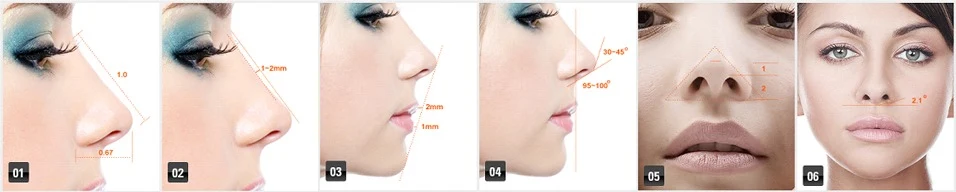
01. The nose is located in the center of the face and should not be significantly skewed; the width of the bridge of the nose is roughly in line with the inner corners of the eyes and mouth.
02. The width of the face is divided into five equal parts. The width of the nose is about one-fifth of the width of the face.
03. According to the length of the face, it is divided into upper, middle and lower courts. The middle court (from the eyebrow to the tip of the nose) should be the same length or slightly longer than the upper and lower courts.
04. The extension line between the outer edge of the nose and the end of the eye should fall near the end of the eyebrow.
05. The ratio from the tip of the nose to the middle of the lips and from the middle of the lips to the chin is approximately 1:1.6–1.7.
06. The height of the corners of the mouth is about 2.5–3.5mm lower than the upper lip, 0–2mm lower than the lower lip, 2–4mm higher than the glabella, and the eyebrow height is about 0–2mm.
structure of nose
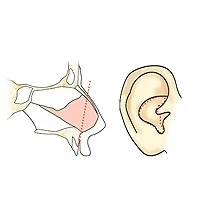
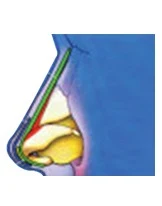
The nose is supported by nasal bones and cartilage, covered with skin on the outside and mucous membrane on the inside; the nasal septum divides the nasal cavity into left and right sides. The bridge of the nose is mainly composed of the nasal bones and lateral cartilage, and the tip of the nose is supported by the alar cartilage. Silicone and other prostheses are usually used to raise the bridge of the nose; the shape of the nose tip needs softer cartilage to adjust.
ideal nose
Viewed from the front, the ideal female nose has a nose width approximately equal to the distance between the inner canthus of the two eyes; the root of the nose is located in the middle of the extension line between the end of the eyebrow and the inner corner of the eye; the angle between the philtrum and the lower end of the nose is approximately 100–110 degrees; and the ratio of the three sides of the face is close to 1:1:1. Compared with the bridge of the nose, the shape of the tip of the nose that is slightly upturned is more often considered good-looking in Korea.
01. Bridge of nose
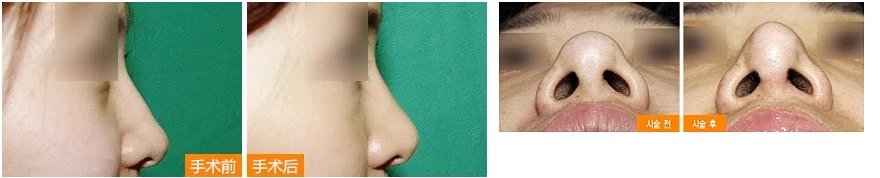
The common nose shape among Asians is a more developed nose tip and a lower nose bridge. To simply raise the bridge of the nose, a implant is often used, which is inserted through a small incision in the nostril. The operation takes about 20 minutes. No external fixation is required after the operation. The intranasal sutures are removed on the 7th day and the recovery time is about 1-2 weeks.

02. Rhinoplasty
When the tip of the nose is round or low, an incision can be made under the nose, the cartilage of the alar cartilage can be concentrated, and the ear cartilage or septal cartilage can be used to raise the tip of the nose. Surgery takes approximately 1–1.5 hours, no external fixation is required, and recovery is approximately 1–2 weeks.
03. Overall short nose
The bridge of the nose and the nose tip are adjusted together, and prosthetic rhinoplasty and nose tip shaping are usually performed at the same time.
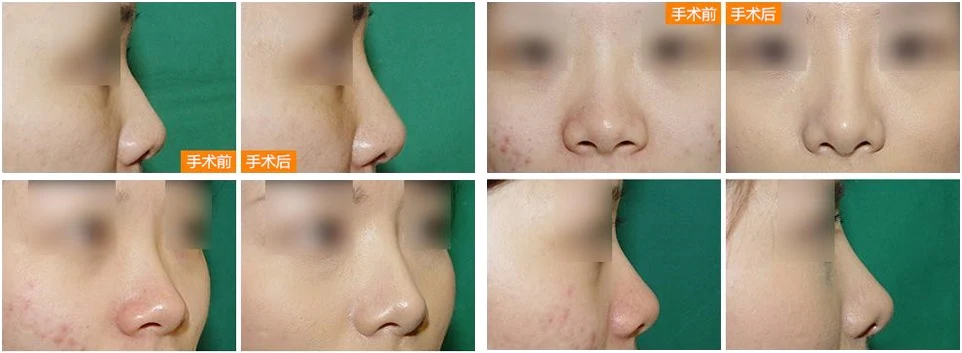
04. Short nose (short nose)
A implant is used to raise the bridge of the nose, and an ear cartilage transplant is used to lengthen and raise the tip of the nose.
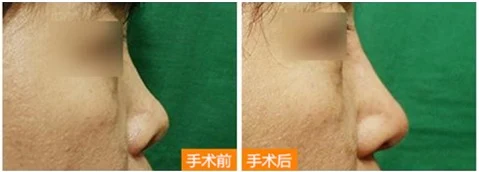
05. Hooked nose
For mildly hooked noses, the protruding part can be polished and flattened with a thin implant, or adjusted through nose tip shaping; in severe cases, the protruding part needs to be removed and the nasal bones on both sides must be reunited.

06. Crooked nose
The nose protrudes forward and is prone to C-shaped or S-shaped deviation due to trauma, fracture or congenital structure; it may also be accompanied by nasal congestion and rhinitis. If the nasal septum is deviated, septum correction and crooked nose correction are required at the same time. Rhinoplasty alone may make it more crooked.

07. Long nose/masculine nose
In addition to raising the bridge of the nose, the tip of the nose will also be slightly raised to make the nose more refined; the tip of the nose can be transplanted with ear cartilage, or the original nasal cartilage can be adjusted according to the situation.
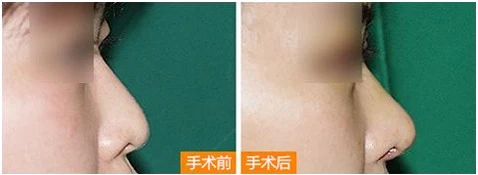
08. Garlic nose
When the tip of the nose is round and the bridge of the nose is low, the bridge of the nose can be raised first, and then the alar cartilage can be concentrated in the incision under the nose. If necessary, part of the subcutaneous tissue can be removed to make the tip of the nose look smaller.
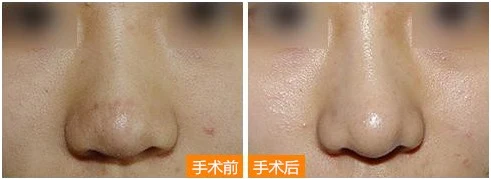
09. Broad nose
A wide nose will make your nose look flat. A half-moon incision can be made on the nose wing to remove excess tissue. When suturing, the incision should coincide with the texture of the nose wing. The scar will not be obvious after recovery; it can be performed at the same time as rhinoplasty and nose tip plastic surgery.

surgical materials
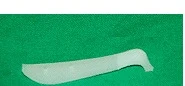
01. Silicone: the most commonly used, FDA certified, can be carved according to the shape of the nasal bones, with clean lines; suitable for people who want a straight bridge of the nose.
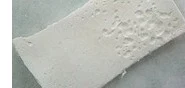
02. Expanded: There are micropores on the surface, tissue can grow in, the fixation is better, and the touch is natural; however, the material is soft and there may be slight deflection or height decrease.
03. Autologous cartilage: ear cartilage or nasal septum cartilage, no rejection, natural touch, suitable for the tip of the nose; another cartilage incision needs to be made behind the ear.
04. Artificial leather: used to wrap prostheses or pad the nose. It is suitable for people with thin skin on the bridge of the nose to make the transition more natural.
05. Autologous dermis: It is mostly used for nose repair to cover the thinned nose tip skin and reduce the appearance of the implant.
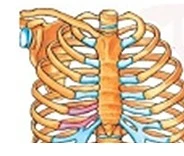
06. Skull/ribs: only used for severe nasal reconstruction or multiple repairs, and is the last resort for rhinoplasty; the nose is hard after surgery and is difficult to modify again, so caution should be used.